


Looking for the best Krk attractions? The island of Krk is much more than beaches. It has a Roman town, medieval churches, a monastery on a tiny islet, a village on a cliff above the sea and a dripstone cave. In addition, one of the oldest written records of the Croatian language was found here.
I’m Jura, and I work every summer as a skipper in Malinska, where my family comes from. That is why Malinska is the starting point of this article: every sight comes with its driving time from here. For an overview of all the towns, see our Krk island guide.
Krk attractions at a glance
| Attraction | Where | From Malinska (car) |
|---|---|---|
| Old town, cathedral, castle | Krk town | 13 km, 20 min |
| St Dunat church | Punat bay | 17 km, 25 min |
| Košljun monastery islet | Punat (+ short boat ride) | 20 km, 30 min |
| Old town and Klančić lane | Vrbnik | 23 km, 30 min |
| Baška tablet (replica) | Jurandvor | 29 km, 40 min |
| Vela plaža, Glagolitic trail | Baška | 31 km, 45 min |
| Beaches and coves | Stara Baška | 28 km, 40 min |
| Hilltop village, Soline bay | Dobrinj | 12 km, 25 min |
| Biserujka cave | Rudine | 13 km, 25 min |
| Roman Fulfinum | Omišalj | 13 km, 20 min |
| Franciscan monastery | Glavotok | 18 km, 30 min |
Times are approximate and do not include summer traffic. In high season, allow extra time for parking, especially in Krk town and Baška.
1. Krk town: cathedral, castle and town walls
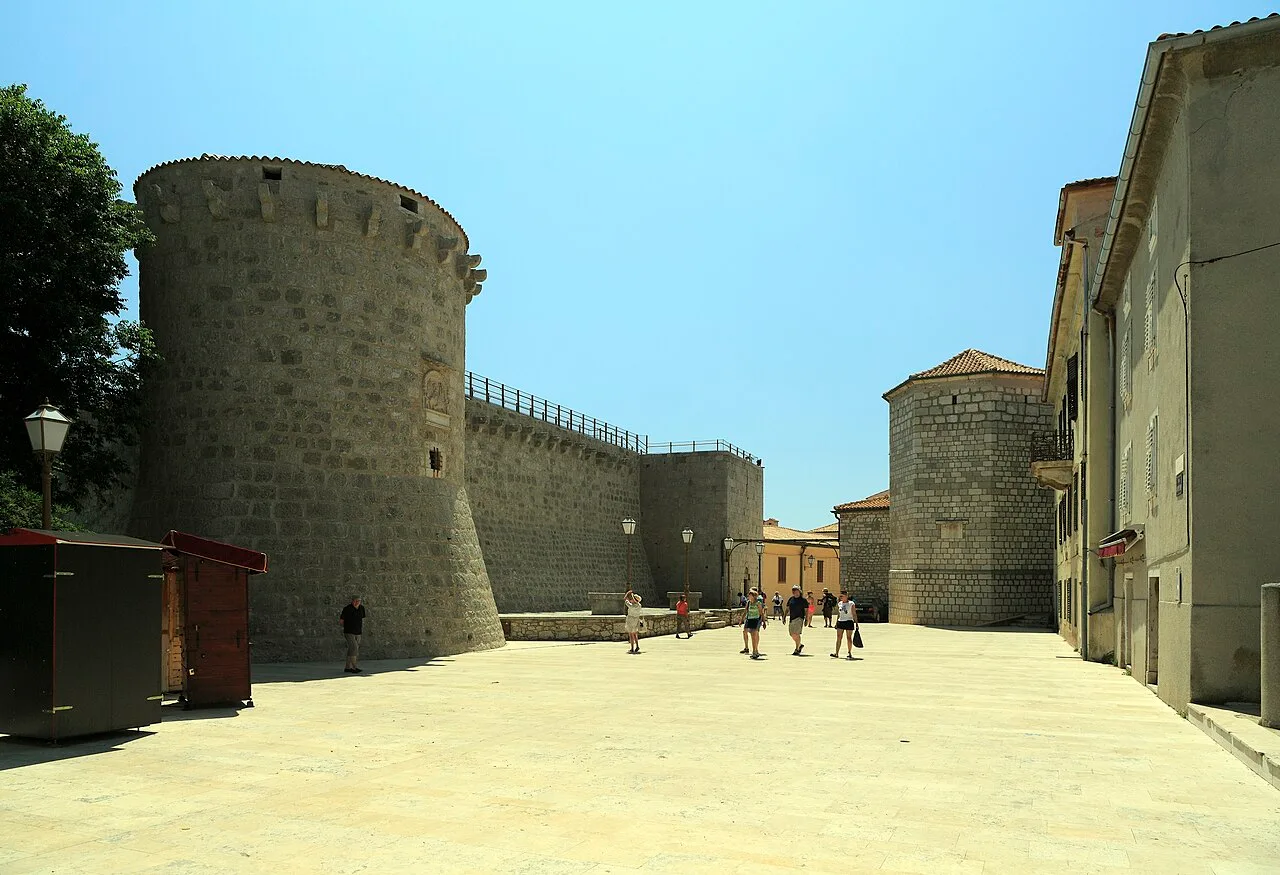
Krk town is the island’s main town and has been settled since ancient times. Its name comes from the Latin name of the island, and Roman ruins can still be seen in parts of the old town.
The heart of the old town is the Cathedral of the Assumption, built mostly in the 11th and 12th centuries. Beneath it lie the remains of an early Christian basilica from the end of the 5th century, and Roman baths from the 1st century were found along its north wall.
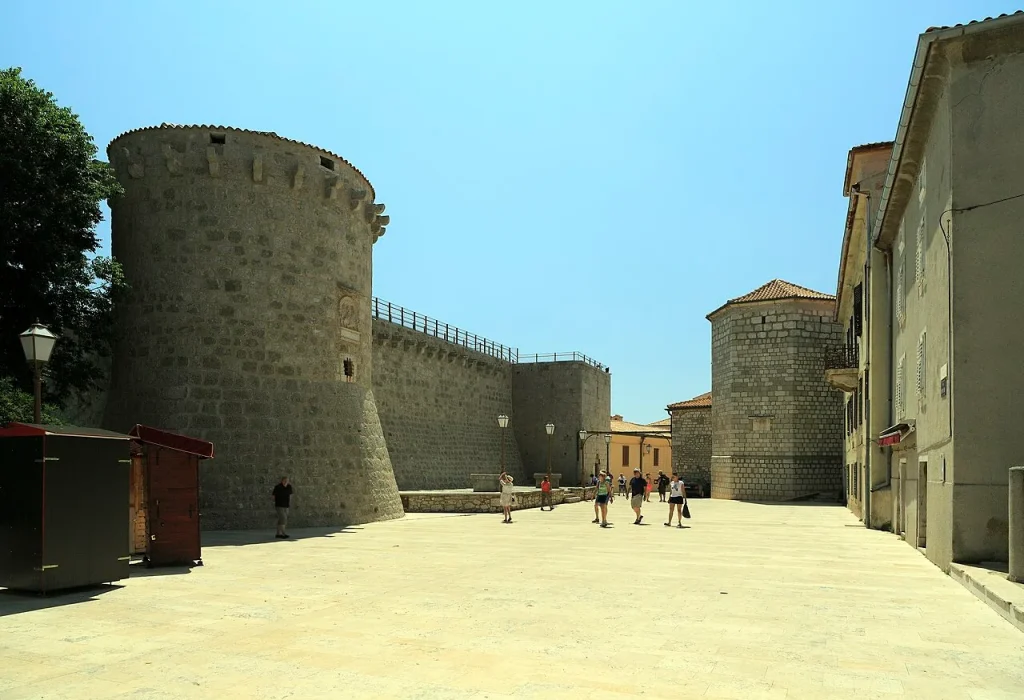
A few steps away, on Kamplin square, stands the castle of the Frankopans, the princes of Krk. Part of the town walls dates from the centuries when Venice ruled the town. Afterwards, wander through the narrow lanes down to the harbour. In the evening, the waterfront is the best place for an ice cream.
2. St Dunat church near Punat
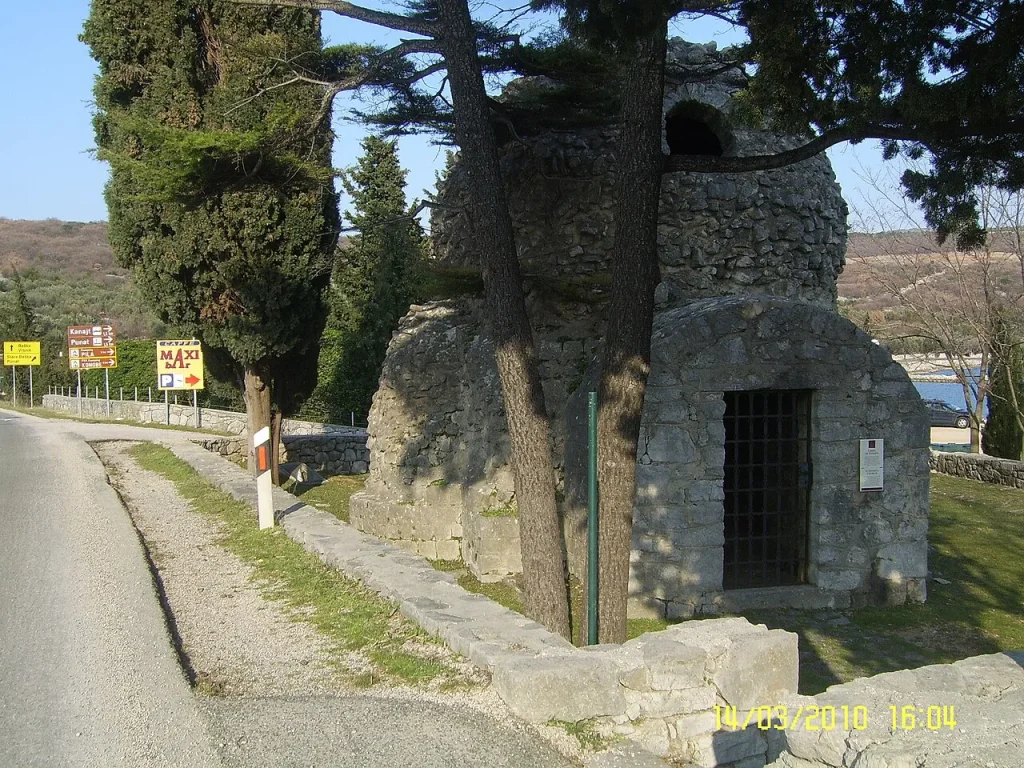
On the way from Krk town to Punat, stop at one of the most unusual churches on the island. The small church of St Donatus (Sv. Dunat) stands by the sea at the end of Punat bay, where the roads to Punat, Krk, Kornić and Vrbnik meet.
It has a four-leaf cross plan and a dome. Its age is disputed: some experts date it to the 9th century, while the information board gives the 12th century. Either way, it makes a lovely photo stop and takes only ten minutes.
3. Punat and Košljun islet
Punat lies on a sheltered bay and is known for its marina. With about 1,300 berths, it is the oldest and one of the largest marinas on the eastern Adriatic coast, and it was the first in Croatia to receive a Blue Flag.
The real highlight, however, is Košljun, a small wooded islet just a few hundred metres off the village. After the Benedictines left, the Frankopans brought in Franciscans in the 15th century, and they built the present church in 1480. Today Košljun is a protected forest reserve and a cultural monument.
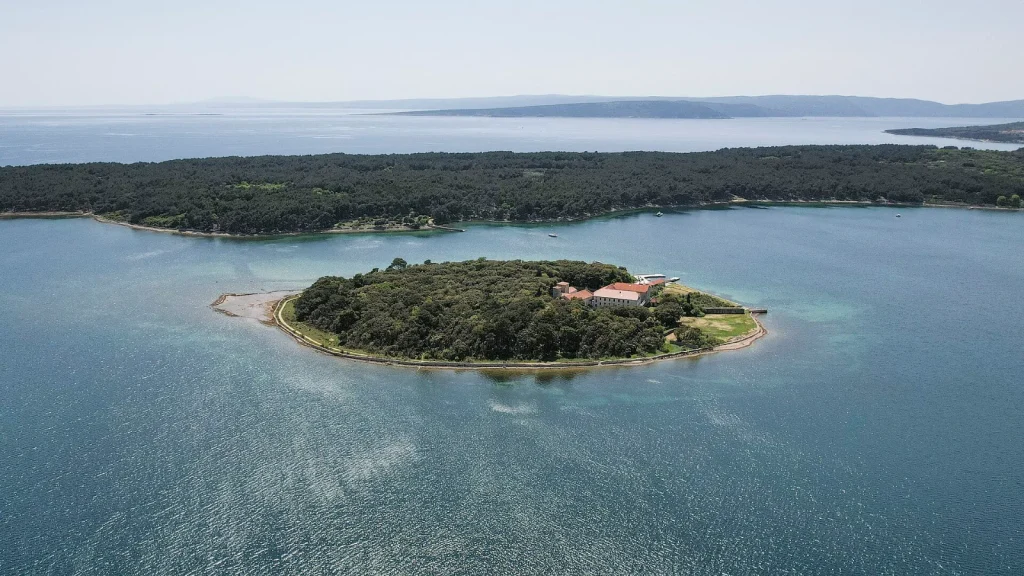
The monastery has a small museum with an ethnographic collection (tools of Krk farmers and fishermen), works by old masters and a library of about 15,000 books, including an atlas by Ptolemy. Small boats take you across from Punat harbour in a few minutes. Allow about two hours for the visit, including the boat ride.
4. Vrbnik: the village on the cliff
Vrbnik sits on a limestone cliff about 50 metres above the sea on the east coast. It was an important centre of the Glagolitic script, and the parish church keeps old Glagolitic manuscripts.
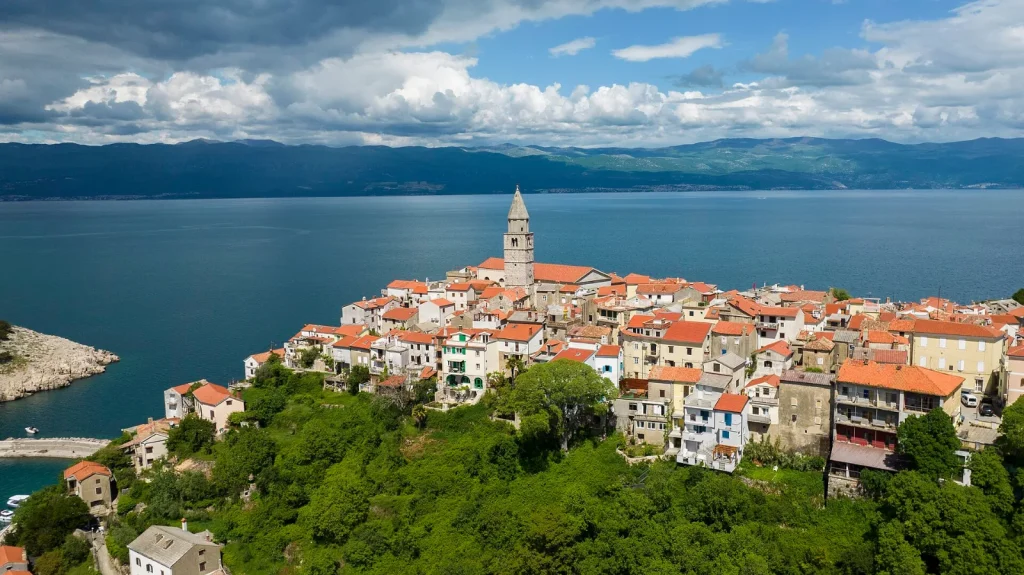
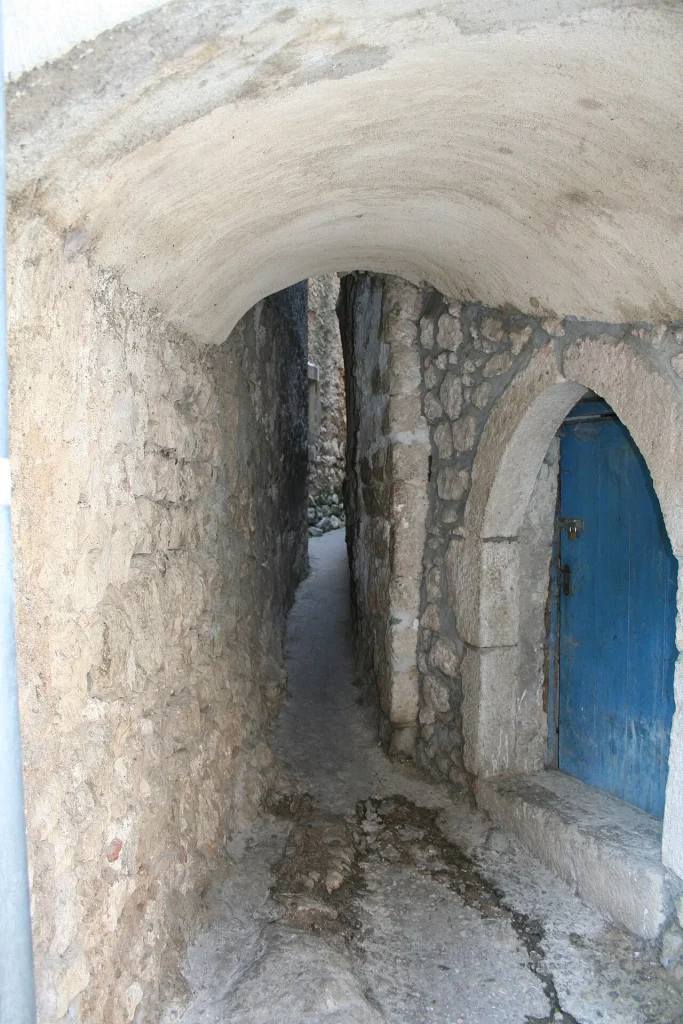
Vrbnik is best known for two things. First, Žlahtina, the white wine grown around the village, which you can taste in several wine cellars. Second, Klančić, a lane only about 40 to 50 centimetres wide that Vrbnik claims as one of the narrowest streets in the world.
Then enjoy the view across the Vinodol Channel to the mainland from the edge of the old town. Since you still have to drive back, leave the wine tasting to your passenger.
5. Jurandvor and the Baška tablet
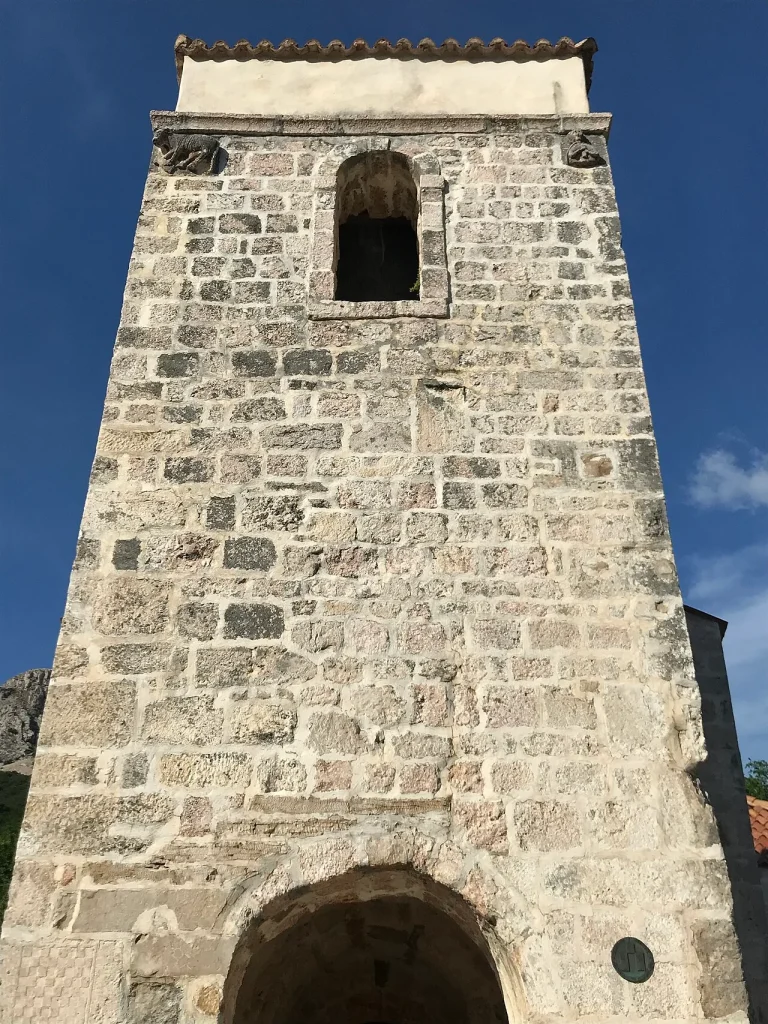
Just before Baška, in Jurandvor, stands the small church of St Lucy. On 15 September 1851, while the floor was being repaved, workers found the Baška tablet (Bašćanska ploča) here. The stone slab was carved around 1100 in Glagolitic script and is one of the oldest and most important records of the Croatian language.
Originally, it was part of the church’s altar screen, and later it lay in the floor as a gravestone. The original has been in the Croatian Academy of Sciences and Arts in Zagreb since 1934, and a replica stands in the church in Jurandvor.
6. Baška: Vela plaža and the Glagolitic trail
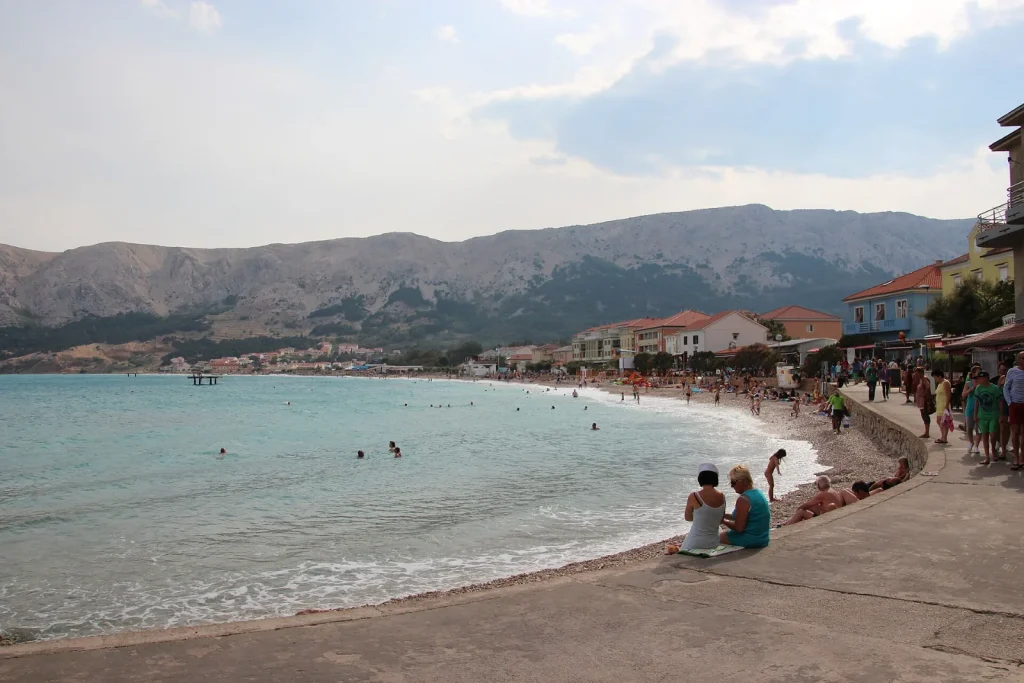
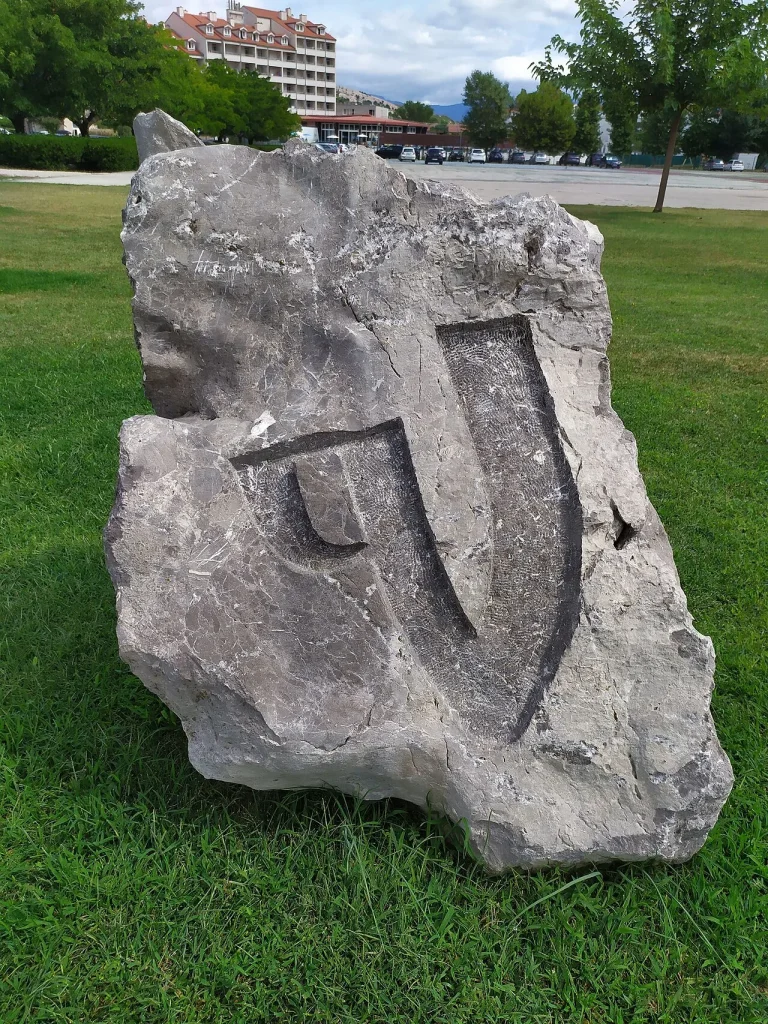
Baška lies in the far south of the island, in a valley between bare mountains. Its beach, Vela plaža, is about 1,800 metres long and one of the best known in Croatia. In addition, there are 16 hiking trails around Baška, with more than 80 kilometres in total.
In and around Baška, look out for large stone sculptures. They show letters of the Glagolitic alphabet and belong to the Baška Glagolitic Trail (Bašćanska staza glagoljice). As a result, a beach day here goes perfectly with a visit to Jurandvor.
7. Stara Baška: coves in the south-west
Stara Baška belongs to the Municipality of Punat and stretches for about two kilometres along the coast. The houses are scattered on steep slopes, and below them lie many small beaches of sand, pebbles or rock. At the end of the village is Zala beach, with the ruins of the church of St Jerome above it.
The hills around it are almost bare because of the strong bura wind, but sage grows everywhere. Stara Baška is one of the windiest parts of the island, so check the forecast before you go.
8. Dobrinj and Soline bay
Dobrinj sits about 200 metres above Soline bay and is one of the oldest villages on the island. Its parish church of St Stephen was first mentioned around 1100 and extended in 1510. The village also has the Ethnographic Collection of the Island of Krk, gathered by the Barbalić family.
Below the village lies Soline bay. Its name comes from the salt pans where sea salt was produced in the Middle Ages and probably already in Roman times. The largest village on the bay is Klimno, a small harbour sheltered from both the bura and the jugo winds.
9. Biserujka cave
In the village of Rudine, about six kilometres north-east of Dobrinj, lies Biserujka cave. It is about 110 metres long and decorated with stalactites and other dripstone formations. It has been open to visitors since 1998, and guided visits run from April to October. Check current opening hours with the Krk island tourist board.
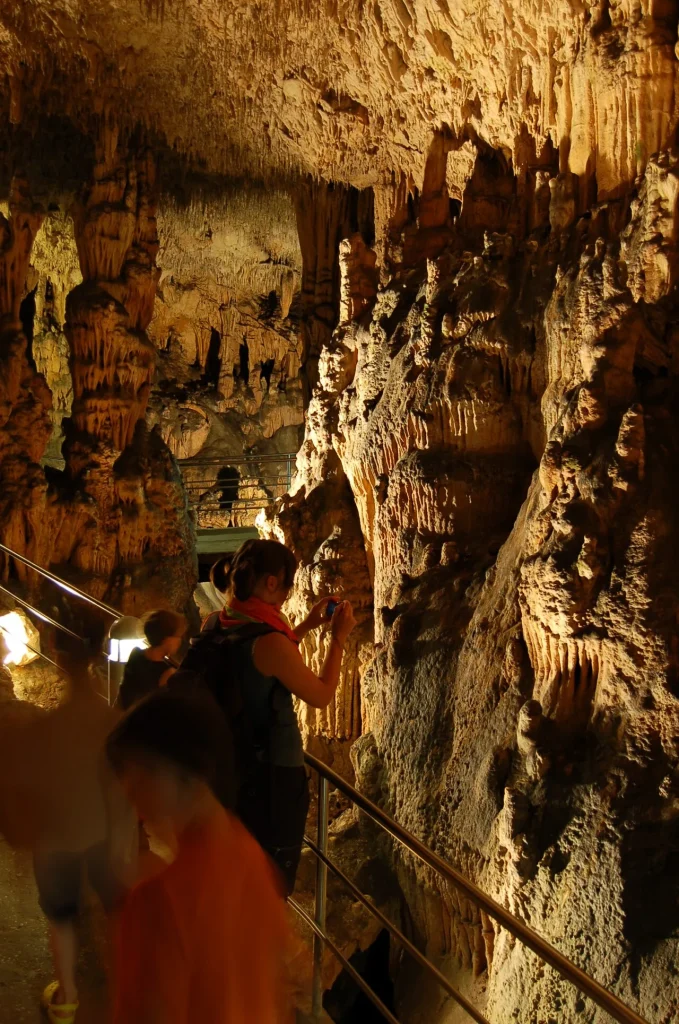
Inside, it is only about 13 °C. On a hot August day that is a welcome break, but bring a jacket. The visit is short and great for children, so combine it with Dobrinj and Vrbnik.
10. Omišalj and Roman Fulfinum
Omišalj sits on a cliff about 80 metres above the sea in the north of the island, close to the Krk Bridge and the airport. Its old town is small, but the view over the Kvarner Gulf is superb.
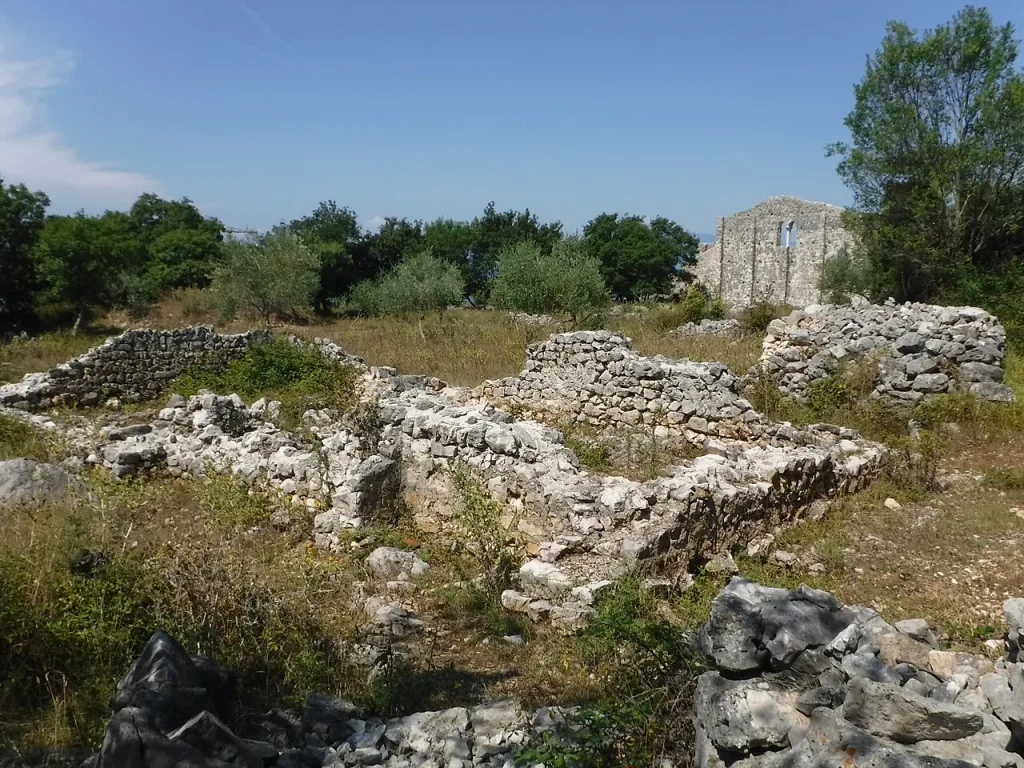
A few kilometres away, on Sepen bay, lie the remains of Fulfinum. This Roman town was built in the 1st century under the Flavian emperors as a home for retired soldiers and was abandoned in late antiquity. At Mirine you can also see the walls of an early Christian complex.
11. Glavotok: a monastery by the sea
Glavotok lies at the westernmost tip of the island, facing Cres, and so it is close to Malinska. In the 14th century, the Frankopans had a summer residence here. In 1473 Prince Ivan Frankopan gave the land to the Glagolitic Franciscans of the Third Order, and the monastery is still active today.
Around the monastery grows a protected holm oak forest, and many small coves line the coast. In nearby Čavlena bay, there is also the small church of St Chrysogonus (Sv. Krševan) from around 1100, with a trefoil plan. A path of about four kilometres leads there along the coast from the monastery.
12. Malinska itself
Malinska has plenty to see as well: the DUBoak maritime heritage centre by the harbour, the abandoned Haludovo hotel and the long seaside promenade to Njivice. Read more in the history of Malinska and the story of Haludovo in Malinska.
Krk from the sea
Many of the island’s prettiest coves can only be reached by boat. From Malinska you can cruise along the west coast to secluded swimming spots. For ideas, see places near Malinska you can only reach by boat. You can drive a small boat up to 5 HP without a licence: here is how, in Krk boat rental without a license.
Three day trips from Malinska
- South (full day): Krk town in the morning, a short stop at St Dunat, lunch in Punat and the boat to Košljun, then Jurandvor and a swim in Baška in the afternoon.
- East (full day): Vrbnik with a wine tasting, then Dobrinj, Biserujka cave and finally Soline bay.
- North (half day): Omišalj and Fulfinum, with a swim in Njivice on the way back.
Visit Glavotok on a free afternoon, by car, by bike or from the sea.
Practical tips for visiting Krk attractions
- A car is almost essential for day trips, because buses between the towns are infrequent.
- In July and August, set off early: in the morning there is still parking in Krk town, Vrbnik and Baška.
- Cover your shoulders and knees when visiting churches and monasteries.
- On rainy days, Biserujka cave, Košljun monastery and Krk cathedral are good choices. More ideas in Malinska off season.
FAQ about Krk attractions
The best known are Krk old town with its cathedral and Frankopan castle, Košljun islet off Punat, the clifftop village of Vrbnik, the church of St Lucy in Jurandvor with the replica of the Baška tablet, Vela plaža beach in Baška and Biserujka cave.
Three day trips cover the main sights: one to the south (Krk town, Punat, Baška), one to the east (Vrbnik, Dobrinj, Biserujka) and half a day in the north around Omišalj. If you also want beach time, plan a week.
The original has been kept at the Croatian Academy of Sciences and Arts in Zagreb since 1934. A replica stands in the church of St Lucy in Jurandvor near Baška, where the tablet was found in 1851.
Košljun lies only a few hundred metres off Punat. Small boats take visitors across from Punat harbour in a few minutes.
No, guided visits run from April to October. It is about 13 °C inside, so bring a jacket even in summer.
Yes. Malinska is central on the west coast: Krk town and Omišalj are about 20 minutes away, Vrbnik and Punat about 30 minutes, and Baška about 45 minutes.
More about Malinska and Krk
- Krk island guide
- Malinska travel guide
- Malinska beaches
- Where to stay in Malinska
- Krk gastronomy and Malinska food
Photos via Wikimedia Commons: Krk town by Falk2 (CC BY-SA 4.0), St Dunat by Bzmarko (public domain), Košljun and Vrbnik by Arne Müseler (CC BY-SA 3.0 DE), Klančić by Einsamer Schütze (CC BY-SA 3.0), Jurandvor by Sibinia (CC BY-SA 4.0), Baška by Andorado (CC BY-SA 3.0), Glagolitic trail by Ľuboš Repta (CC BY 4.0), Biserujka by Wolfgang Glock (CC BY 3.0), Fulfinum by Derbrauni (CC BY-SA 4.0).